Showing posts with label foraminifera. Show all posts

16 September 2026

Surface sampling

Low tide was at 7:17. I need low tide for my sampling, This would be an early start! And I would have to pick the students up from Bangor. That meant: getting up at 5:00, leaving the house at 5:30, load up the hired vehicle at 5:45, picking up the students at 6:15. We could then be at HQ at 6:45, and in the field by 7:15. Perfect timing! Jaco would pick up his students (basically, all those not coming with me) at the same time. And because of the student members, we needed a third vehicle, with some of his students, and some of mine.

It didn't quite work that way. One student had overslept and was only there at 6:30. I had picked up my gear, not Jaco’s; I figured he would do that himself. That was a misinterpretation. Our technician, driving the third vehicle, didn't pick it up either so someone had to get back for it. We didn't have the key for HQ, so we got there for no reason. It was a bit complicated!

In the end we all got to where we need to be, and the tide was still fine. I had discussed with the students where we would take a transact of sediment samples. And that had been conveniently close to parking.

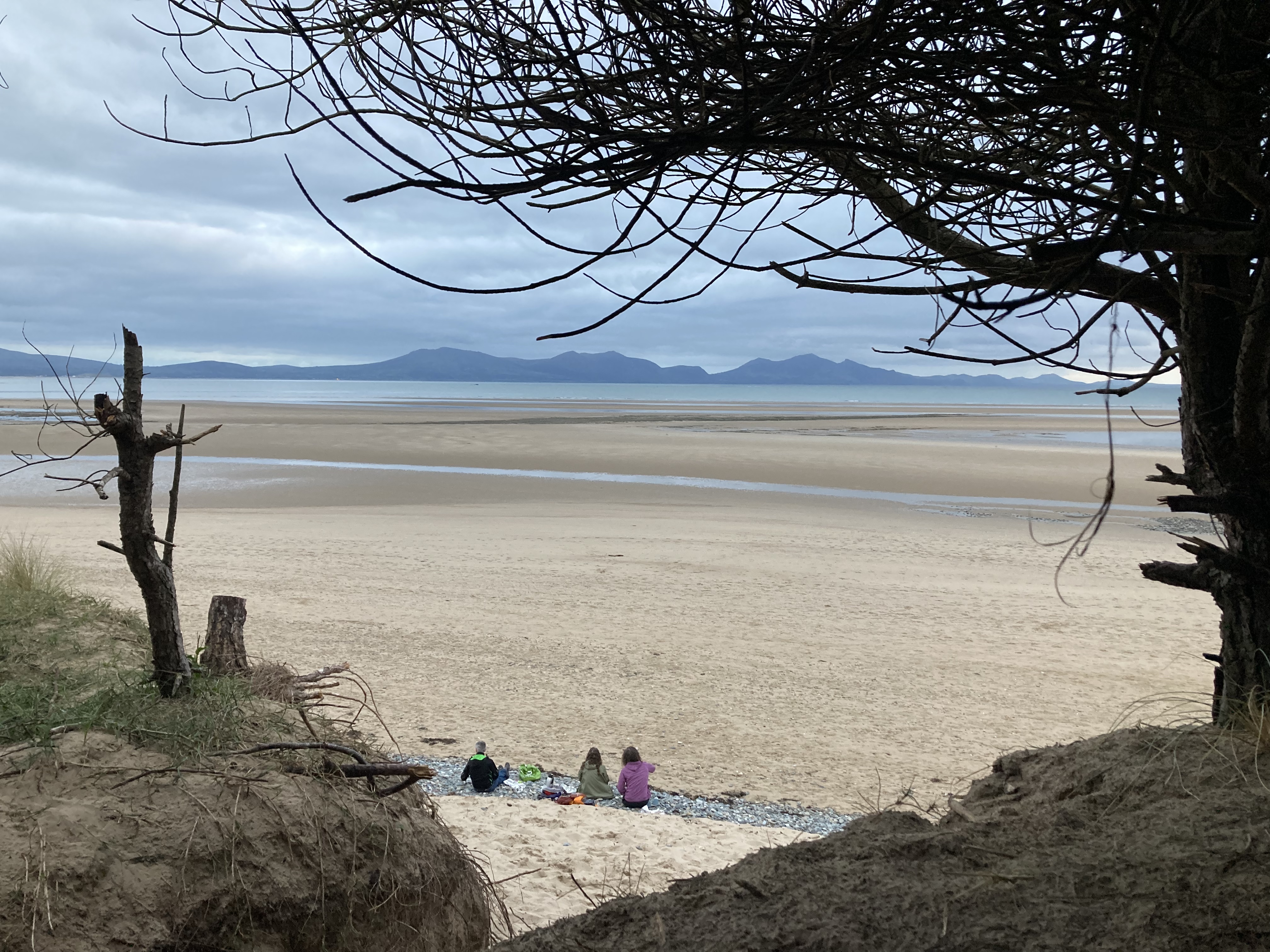
It was a bit misty, but it was dry, and the temperature was pleasant. Perfectly fine fieldwork weather. On the way into the estuary we looked at the environment we came through, and chose which ones we wanted to sample. And when we decided we had been as far as we wanted to be, we tried to survey in the location I took the first sample. I couldn't make the GPS reach its normal accuracy, but it would have to do. At least the sampling went well. We made sure that only take as many samples as we have sieve stacks. That is novel; normally, I make every student take a sample. But this is quite a big class, and that seemed excessive. Fewer samples means less work for everyone.

The estuary 


When we were done, I was quite keen to get to HQ. We could; Martin was there by now. And a few students were keen on a coffee. I would take my student to the lab afterwards, and of course, in the lab, you can't eat or drink. So this was our chance. I also wanted to ask Martin a few things. Jaco and his students were done for the day, so they were more keen to go back to campus. So two vehicles went straight back to campus and mine went past HQ. 

It was about ten o'clock when we reached HQ, and I had had breakfast at five. I was quite desperate to consume something. One of the students handed me a coffee and I was very grateful. And I had half my lunch. I also go to ask Martin everything I needed to ask, so after that we could go.

In the lab, all went well (except one mishap with the handle of an oven.) With only seven samples to sieve, and the students really being quite executive about it, we were done quite soon. And then Stef, our technician for the day, offered to bring all the students back to main campus. That was great! That saved me driving there and back. Why use two vehicles when you can use one.

In the office I could do all these other things need doing, and when I was done, I could take the rental vehicle home. Nobody else needed it the rest of the day. And that meant I could drive straight from home to where the students are picked up the next day. That would save me at least half an hour!

The day after had the same schedule. And mostly similar weather, although this time we caught a little shower. The students were quite responsive again. And this time, I got the GPS to work well. 

The work in the lab was quick, like the day before. And again, Gareth took all the students back to Bangor so I didn't have to do that. And I processed the samples of the day before. Well before lunchtime I was done! So that was pretty much it for the surface sampling. Popping back into the lab process the second batch of samples will not take long. Onwards to the coring! 


06 November 2025

This year’s foraminifera practical

After I pick the fossil foraminifera, it’s time for the students to pick the foraminifera from the surface samples they took. This year it would be an ok practical as the class size wasn’t very big. And it went well! Mike was there to help me out, like last year. It was a bit unusual in that we had one student not there even though he had been on the field course, and two students there who hadn’t been. 

We decided to let them pick forams until 11 am. The rest of the time was for identification and verification. And some students only had one species. We were done before the timetabled end of the practical. Great! And soon after, the students started mailing through the results. I didn’t yet have time to collect them. That day, I had to inhale some lunch, and was then in a School Board meeting for the rest of the day. And two days later I would have a practical again! 

Some of the fossil forams


27 October 2025

Forams

Every year, I ask the students to compare the foram assemblages in the sediment core we take in the estuary to those they find in the surface samples they take. Would they spot corresponding environments? The students process their own sample, and it is up to me to process the samples of the sediment core.

I've done that now! It is not a very diverse assembly, but it's ok. And it is ready for the practical session next week when the students pick the forms out of their own samples. Now they know what they will be comparing it against.

Several species of Forams! 

It's a busy time, and it's not so easy to find time to stare down a microscope. But it is nice to sometimes be able to do just that. Forget the computer, put your headphones on with a nice radio program or podcast, and look at the little critters! And let's see how good the comparisons will be between the surface samples and the fossil samples…

18 November 2024

Foram confusion

I tend to slightly dread the foram practical associated with our September fieldwork. So many forams, and so few staff to check their identifications. But this year, another complication arose. The students are asked to send me their data after the practical, and I assumed I would just collate all their data in one spreadsheet and then they could go and interpret it.

It didn't quite work out that way. I thought I had been hammering the point to the students that a sample of which you don't know the provenance is worthless. But I got loads of counts sent to me that didn't specify which sample they represented. That's not helping! And I collect the actual samples as well, so I can check, but these weren't very well labelled either. So I just had a spreadsheet with the samples I could match up; some of them were impeccable, with detailed and matching sample information on both document and microslide. But of some I just didn't know where they belonged. I hope the students can look at their notes, recognise their handwriting on the microslides, et cetera, and work out which sample is which. Because this data set is pretty rubbish! Next year I will have to personally check every single microslide to make sure it is obvious which sample is which…

Fine forams, but which sample are they from? 

29 October 2024

Foram practical with new team

This year the annual foraminifera practical, associated with the fieldtrip, would be quite big. We had 33 students! That is quite a lot. And there are not many people in the School who can recognise the critters. In the olden days, it had been Katrien who would help me in that session. She had covered James’s teaching in the past, which included this practical. But she had only learned to recognise the forams for that purpose, and didn't really use that knowledge for anything else.

This year, two things happened; firstly, Katrien was unavailable, and secondly, there was increased teaching contribution from a guy who was normally only involved in research: Mike. And his PhD work had involved foraminifera. Since then I had the impression he had strayed quite far away from them, but it was a lot more exposure to the critters than Katrien ever had. So I asked him if he was willing to step in.

To my surprise, he was quite keen! Normally if you ask someone to take on an additional task they are quite grumpy about it. But he was glad; he said because of his contract and its circumstances, he had felt a bit apart from everything else. Being involved in teaching was actually something he was embracing. So that's great! I have a foram buddy, and he feels part of the team. Everybody wins!

I didn't want this to get exhausting. So although we had the lab until 3 PM, I told the students to stop picking forams at 11 AM. The picking is not the hard work. The identifying is! And I always insist on every single foram identification to be checked. And that was all just Mike and me.

Quite a lot of students didn't have an awful lot of forams. But that is life! Some of the samples are even barren. And with the picking over, the identification help, plus ID checks, followed. That is hard work; as soon as you are finished with one student, you see three arms in the air from students who also want their identifications checked, but I think we did it. And we were done by approximately 1 PM. Good for me! Then I could walk out to have lunch. And then I went back to retrieve the stuff that had to go back to my office rather than to lab storage.

I think it went okay! I have not yet compiled the database. The actual practical went okay, with students not being too impatient about the suboptimal staff/student ratio. And Mike was on good form. Let's do this again next year!

A foram


22 October 2024

Back to the microscope

The thing with term is that once it starts, it moves fast. Events always approach quicker than you want them too. And one of the events that was approaching me was the micropalaeontological practical associated with our fieldwork module. The students then analyse their (modern) samples for foraminifera assemblages, so they can compare them with the fossil samples. But someone has to do these fossil samples. And that someone is me. 

I also felt the need to split the samples, in order to not spend ludicrous amounts of time on them. Some samples were so big there really was no choice. And the School has such a cute sample splitter. I think it hasn’t made the blog yet, but it’s time to change that! 

The cute sample splitter

Some forams


I quite like doing some forams! It’s just that there is so much else to do. But it’s done now. Roll on the practical! With a new charming assistant. Stay tuned! 


06 December 2023

MSc student

Sometimes I don't quite get around to blogging about certain things. At the moment, I have a Master's student. She was allocated to me in September, but at the time I think I was quite distracted by things such as our fieldwork. So I don't think I mentioned it at all!

The project she is doing sort of builds on from two earlier projects: one project that another student did quite a number of years ago now; I had to hand this student over to a colleague, as during a crucial part of the project, I was off on sick leave because of my RSI. This student basically tried to figure out if foraminifera are good indicators for pollution in estuaries. She compared estuaries Parys Mountain (biggest copper mine in the world in the late 18th century; the site also contains lead, zinc, and silver) drains into with the Cefni, which has no mining of note in its catchment area, and where we do our September fieldwork. 

The other project was nothing to do with me; that was something having to do with pollution only, again from Parys Mountain, but this time not related to foraminifera. That was Lydia's project. She went downcore. And she found clear fluctuations in the amount of mining pollution. Would you be able to see changes in the foraminifera assemblages as well? The other project had proven that at least at the surface, you'll find forams and very polluted sediments. 

For now, she is focusing on using Lydia's samples to get an idea of how many forams are in there in the first place. When we have a clear idea we can either go into the field and get her own samples, or we will have to sit down and redesign the project, because there just aren't enough foraminifera to go around. But luckily, this is a joint project; I am doing this together with my geochemical colleague David. If there aren't enough forams I am afraid there might be some more emphasis on his side of the project! But let's first see what these pilot samples yield. Many, I hope!


The first foram found! Pic by my student.


04 April 2023

Writing for Gwerddon

A popular assignment we set our students is to let them write an article in the style of the Conversation; an online popular science journal written by scientists themselves; not journalists. There also is the Welsh equivalent; Gwerddon. And the lady who is organising the Cymraeg + project had sent me the task to write an article for them. About foraminifera.

Unrelated foram

I had booked the latest timeslot she had available for going through it. That would buy me some time to write it! It is a sizable task. And it wasn't really that quiet a time. I admit that some of it I wrote during a dull meeting I had to be in. I submitted it in the morning and we discussed it in the afternoon!

When we were done discussing it, she revealed that her intention was that we would actually send it to Gwerddon. That threw me a bit! It was written in a bit of a hurry, and I hadn't vigourously checked anything. I did give a number I wasn't entirely sure of. It is, of course, quite easy to check it, but still! Publish this? Crikey!

Another issue is that generally, you submit something to a journal like that when you have just published (in peer-reviewed literature) some interesting research you think more people should know about. And I haven't published anything about foraminifera in a while, and nothing about this particular topic at all. But whether that is a problem or not is, of course, the decision of Gwerddon. I am sure they would be quite happy to tell me if that is an actual requirement.

She asked me to add one paragraph. I haven't written that yet! By the time I have, we can contact the editors. But who knows; I might be spreading the word where I never expected it!

18 January 2023

What are "foraminifera" in Welsh?

If you do a talk about foraminifera in Welsh, the first thing you need to know is the word for foraminifera in Welsh. And that immediately proved a bit of a stumbling block! None of my dictionaries has heard of it. And the University has a special website where you can look up academic and scientific terms in Welsh, but even that site hadn't heard of them. Now what?

With a term like this, it's not unreasonable to just take the English word and Welshify it a bit. So I devised ‘fforaminiferaidd’ and ‘fforaminiferoedd’ (Welsh has very many ways of turning a singular into a plural), but also figured that maybe an actual translation was a possibility. Foraminifera just means ‘bearers of holes’. Surely I could turn that into Welsh! To carry or to bear is ‘cludo’ and a hole is a ‘twll’ so hole-bearers would be twllgludwyr. 

You can see the holes in this picture

At the beginning of my presentation in the front of the other advanced Welsh learners among the academic staff, I threw the question into the group. What did they think? And they were pretty much unanimously in favour of twllgludwyr. And the tutor even said that the website with specialist terms I mentioned above is made in the house; maybe they should just add my concoction to it? I don't think there are many people who do discuss foraminifera in Welsh, but just suppose that there are, they might want to find this word!

I am actually quite chuffed at the thought that I might be contributing a word to the Welsh language. Let's see if this really happens! If so, it will sure end up here on this blog! 

24 October 2022

2022 version of Cefni foraminifera analysis

 Through the years, what I have made the students on our third year fieldwork module do with foraminifera  has changed a lot. It started how my predecessor James has designed the assignment: take the students into the field in the morning, make sure they process the samples before lunch, bung the samples in the oven, and then have them pick and count 100 specimens after lunch. Sometimes they weren’t finished until 9 pm. And the sampling in the morning was tide dependent, so that sometimes started before 5 am. Those were heavy days!

When, for financial reasons, the field trip had to become shorter, I was given less time. And I basically couldn't really make the students do any assemblage analysis anymore. It felt like the whole exercise was becoming a bit pointless because of that. But then everything changed when the pandemic hit. The first year we had to do the whole field trip online. It was far from ideal! But we made the most of it.

Then last year we went in person again, but now in the north. And with severe restrictions on how we could transport students. Suddenly, we had to transport all the students at the same time. That meant I had to drag all the students into the field, make them all do various activities, and then ship them back to Bangor. That meant I had to bunch many activities into each day. You need to keep them all occupied! But there is only so much we need to do in the field, so I basically just claimed one day in the lab in the middle of the field trip.

This year we could use more vehicles again, so we could just bring the students that were scheduled to do something into the field, and leave the rest where they were. So we could spread things out again! And that meant that we were in the field every single day. I had asked Martin to give me a day in the lab afterwards. That seemed much more suitable; just do that assemblage analysis during the actual term! And that day came. It also meant we were back doing a full day of micropalaeontology in the lab; something I had got rid of in one of my other modules, as it is too much for one person to supervise, and I am the only one in the School who can do this. Katrien is very helpful, but she has never worked with forams, and sometimes misidentifications sneak in! And that can do strange things to your dataset. 

The practical was scheduled from 9 to 3. That should be doable! The samples were ready. I made sure I was there fairly early so I could make sure all was set up. And at nine, Katrien appeared. She tends to be my assistant in these things! But she had to leave early, and that was a pity.

I first explained to the students how you adjust and work a microscope. They might not have worked with low power microscope before! And if you don't point things out to them, then sometimes they are unaware of basic things such as how to zoom in. That's very important with foraminifera analysis! 

I also explained to them that I wanted them to pick an identified split of their sample. It wasn't important how big the split was; 1/2. 1/8, 1/128; doesn't matter, as long as they ended up with neither too many nor too few forams. I wanted them to try to get to 100. So I suggested they try to first establish how abundant the forams in their sample were. And then try to create a split that does indeed have some 100 forams. And then I got them picking.

After a while I also told them a little bit about how you identify foraminifera. That is the interesting part! But it takes awhile. And we had 20 students there.

With Katrien leaving just under those about to become very busy I quickly realised that we would not manage to have all the counts checked before the practical was over. I had a quick think. I then suggested that the students that they spent the last minutes of the practical making sure all their materials properly labelled. And then to stand both their list with identifications, and that my growth with the foraminifera on them to me. And their sample bags with the various splits. Then I could just check their identifications in my own time, and give them the complete dataset back ASAP. And they thought that was okay!

A few students decided to have their counts checked there and then. Generally they had done well! And then they left, and it was up to me to collate all the materials. And I was not overly impressed! The sample labelling was not what I hoped it would be. There were microslides and lists without a name; there were microslides and lists without a sample number. There were lists and samples with sample numbers I knew were wrong. And if you don't know which some sample is which, you can't use these samples!

In the following two days I went through all these samples. It was actually quite pleasant to do! Sometimes I could check the identifications specimen by specimen. That is ideal; then you know if there is a particular species a student might struggle to identify. But in some samples, the specimens weren't properly stuck down to the cardboard (an indication of insufficient glue having been used), the specimens had moved around and the only thing you could check was the total numbers. That still gives you a good idea, though!

The Friday of that week I published the full set; both the modern ones from the practical, and the fossil ones I had picked myself. I think I need to ask timetabling to insert a lecture to help with the students on their way making sense of this. But I will also emphasise good labelling practice! A sample is often something you have spent quite a lot of time (and sometimes money) on; you don't want to then not be able to use it.

Soon we will put the data to the test; can we derive in what environment the various units we found in the sediment core were deposited? I sure hope so! 


All forams still in place!

Forams have moved...

Attempt at photographing an E. williamsoni with algae in its test with an iPhone

11 October 2022

Newborough fossil forams

Since forever, the essence of what I had been doing during our annual field trip was make the students compare modern foraminifera assemblages from known environments to assemblages from several stratigraphic levels in a fossil core. The idea is that they can then figure out what sort of environment these various levels represent.

The fossil assemblages had been established before my time; the modern assemblages were originally established by the students during the field trip, but as the trip had to become shorter and shorter for financial reasons, there was less and less time for that, and in the end I had to just make them work with data from previous years.

Then we went to a new field area, and we were working with a blank slate. In the first year, we did get modern assemblages, but the sediment core was so dull I didn't even bother to sample it. And I didn't entirely trust the modern assemblages; I wanted to go through the slides and check, as there were some identifications I was very skeptical about. I try to check them all there and then, but it seemed like that hadn't quite been successful. But the technical staff hadn't kept the samples, so I couldn't verify anything. In a way, this year, the second year we were doing this field trip on Anglesey, we therefore had yet again a clean slate.

This time I decided to only take and process the samples during the field trip, and do the assemblage analysis during the semester. Everything is ready for that. But we did the coring on the last field day of the fieldwork; I did not want to drag the students into the lab to process these samples too. So I sieved them myself on the day the students were putting the final touches to the field notebooks, and put them in the oven. A few days later I got around to sieving them again; if you dry your samples like that, they become a clump, and you have to disaggregate them to be able to do foraminifera analysis. And when that was done, only the big job of actually picking and identifying the forams had to be done.

I picked some strategic horizon; I don't have time to do them all. I took 23 samples! And I started with a rather small sample, only covering 1 cm. 

Not a good picture, but believe me; these are good-looking forams!

When we cored up these sediments, we developed hypotheses about what sort of environments they represented. Some of it may be dune sand, and that won’t have forams in them at all! This horizon surely did. The work has started!

It is actually quite nice to do a bit of foram analysis. I borrowed a microscope from the lab and put it in my office, so I'm doing this in private, with the radio on. Quite nice! And I will be the first one to know whether our interpretations were correct…

17 September 2022

Looking for modern foraminifera for the fieldwork

When the introduction day was done it was time to get real and collect some samples! And in itself that was not much of a problem, but there was a complication: the tide. I have to do that during low tide, and the week of the fieldtrip had one low tide really early in the morning, and one in the early evening. Neither is ideal! And given that I take the students into the lab to process the samples afterwards, I decided I should go in the morning. But that meant an early start. I would pick up the students at 6:15 in the morning every day, from the main campus. And that meant getting up at 5. I wanted to have time to have proper breakfast! Otherwise I would struggle in the field. And it was quite early. When I woke up that first morning I got to my south-facing window and got blasted in the face by a full moon. I decided to just have breakfast in the moonlight! And when I picked up the students, the sky was beautifully orange. When we got to the field, the morning light was amazing. Things were starting well!


Breakfast moon

Morning in the estuary 


After some problems with handheld GPSs last year, I had this time booked the fancier GPS. So I started that up and took the students onto the sandflat. As the tide was coming in, I wanted to do the lowest samples first! And then work my way to higher ground. And we properly surveyed them in. It was a gorgeous morning but then we had to leave the field and go into the lab to process the samples. We were done before noon! And then I brought the students back to the main campus. My first field day was done! But I was quite tired.

The next day I had more students, and more clouds. The field was still beautiful, but in a different way. More Wuthering Heights than Heidi! And we didn't manage to make the fancy GPS work. But we had the handheld ones for backup, and that did the job too. 

The people who were targeting the late low tide that day got rained on quite a lot! So what we did had its advantages. And I think the day after that was similar; we were dry in the morning, and the afternoon crew got rained on. We also had company in the field; Jaco was doing his thing at roughly the same time and place as us. That was nice!


Dramatic skies on day three


The last day was a bit chilly, and on top of that, the midges were out. It was the least comfortable day, but we filled some gaps in the sampling transect. It was a success after all. And then I had all my samples! I brought the students back to main campus after the sample processing, but given that this aspect of the fieldwork was now done, I didn't need the big Ford Tourneo any more, so I brought it back to Ocean sciences, and spent a bit of time in my office. I made sure to plot up all sample locations. It looked good to me! But then I was very tired, and took my trusted bike that had been waiting for me in the office since Saturday, back home. The fieldwork wasn't over for me now, but the first part was done and dusted!


A foram! With algae symbionts! In the middle.

Last year we had chosen one evening of the fieldtrip to go have fish and chips on the beach. I think that is now a tradition, so after coming home I had a shower, did some things that needed doing, and then was picked up by Sue and Dean to go straight back to where I had been in the morning. We met up with Martin, and we had a very pleasant evening on the beach! For me it was a celebration of four days of sampling for more than foraminifera having come to an end. And the next day I didn't have to get up early at all. Excellent timing!


Dinner on deserted beach

06 September 2022

More fun with forams

Our annual third year field trip has a long history. We have an emeritus professor in the school who did his PhD in the area where the field trip started. It was all based on that, really! He must be close to 80 by now. The field trip still goes. And when I joined it really soon after starting work at Bangor University, I inherited all the teaching material from my predecessors.

For many years, the component I ended up teaching was taught by my colleague James. And back in the days, he had PhD student called Bill. And the teaching materials included line drawings of the most abundant species of foraminifera they would find in that estuary. I've been using them too.

Sometimes you find a species in your samples of which there is no line drawing. So far I had just ignored that. But now that we even have moved to another side of Wales, I figured it was important I adapt the set of drawings of it. There are some species we never find, and there are some species not in the drawings that we do find. So I set to work! 

I was certain the old drawings were just done on paper. And in order to make my drawings look most like his, I should have done the same. But in the end they had to end up in a PDF, and I decided that efficiency was more important than staying close to the original style. I drew mine directly in Inkscape. I'm not very good with that package yet, but I figured my drawings were of sufficient quality to help in identification of the species portrayed. 

I think it is the first time in decades that any drawings have been added to the original set! Bill has been a professor in St Andrews for years. It actually was quite some fun to do it! And it's not as if you can't tell the difference between the two styles, but I do think I made the difference subtle enough to not be jarring!


the old Elphidium williamsoni drawing by Bill top left, and my additional species


23 August 2022

Pondering forams

My master student has been in the lab for weeks now. There are many foraminifera you can see in that time! And that some point he had picked a sample, I wanted to show it to me. He had grouped the specimens by proposed species. And there was one rather abundant species of which he did not know what the species name was. And when I had a look I realised that neither did I! And this happened with another species in a different sample. So I retreated to my office and dived into my documentation.

Ideally, he would try to find this himself, but the problem is a bit that there are so incredibly many species. Where to start? I have lent him my Cushman book, but in spite of that being a classic it still has its limitations. And I have a complete Ellis and Messina Encyclopaedia, but that is very unwieldy. And where would he start to look? So I figured I could reach a nice compromise by coming up with a few proposed species per unidentified species, and then let him tell me which one he thought it might be, if any. With many years of experience, I know where to start. 

I actually quite enjoyed diving into literature, Google images, my encyclopedia, my memory, and the World Register of Marine Species. And I did manage a few proposed species! I printed out the descriptions from Ellis and Messina for my student. I wonder whether he comes to the same conclusions as I did. And I certainly have learned something! It is exciting to come across a species you haven't seen before. But I think I will see more of these. We are not done in this estuary…


Would we have this species in the assemblage?

05 August 2022

Back to foraminifera analysis

If you have been in the field, the next step is to hit the lab! After the two days in the field with my master student, it was time to first sieve out the samples, and then get to the important part: foraminifera analysis.

We didn't have an exhaustive number of samples, so it didn't take Alexander very long to sieve them and dry them. And then the real work started! I brought out the equipment, and the reference collection, and my Cushman reference book. And the handout the third year students get during our estuary fieldwork. There are some 40,000 species of benthic foraminifera; that is bit of an intimidating number. I'm not quite sure how many species the Cushman book has, but still more than is practical if you are only starting out. So I figured the handout with only some 20 species would be a good start!

My reference collection

I suggested he started in the sand. These samples are always quite clean, regardless of whether you were sufficiently patient while sieving. They also tend to have a nice assemblage. So a good place to start!

When he had picked his sample I had a look. Not spectacular, but nice enough! He had a beautiful Lagena, which looks like a miniature glass vase (you don't get these in the high marsh), and some gorgeous Elphidiums. And, of course, a whole bunch of not very pretty clunky Ammonia. You can't avoid these! 

I'm curious to see what else we will find. But it is was nice to look at forums again! And let's hope the entire project yields interesting results…

Ammonia


28 July 2022

Fieldwork in the Dee Estuary

Your research is only as good as your samples allow it to be! So for a project all about foraminifera analyses, getting samples is important. For my project with my student Alexander, the idea was to compare foraminifera assemblages from the Dee estuary (with her highly industrialised catchment) with those from the Cefni estuary (with much less industrialised catchment). So we needed to visit both locations. And I wanted to start with the Dee. It's a lot further away, it's a lot bigger, and I know it less well. It is easier to adjust what we do in the Cefni to what we do in the Dee than the other way around! And it had taken Alexander a bit of a while to come up with a sampling strategy, but once we had it, we could go. I made sure to book the GPS and a School vehicle. And one rather overcast Friday morning I picked up Alexander from main campus!

I had checked the route beforehand; it shouldn't be too difficult. Just head for Manchester until you see Birkenhead indicated, and then go left twice. That's it! And it really was that simple; just on memory, I got to where we needed to be. And there happened to be a pub there.

I looked at the endless Saltmarsh with its complete absence of shelter, and as my student I barely knew, then I thought maybe we wanted to pop in for a coffee so we could also use the facilities. Having a wee in a saltmarsh with a stranger not very far away is not everybody's idea of fun. So we had a quick beverage in the pub! And then we started the GPS. We were go!

Right by the pub there were actual stairs leading onto the marsh. We took them. It didn't lead to a path, though. The vegetation (mainly sea club rush) was almost as high as we were, and the going was tough! And within 10 m we were standing in the slop. I was glad I had warned Alexander beforehand.

Decorative Parkgate at the head of the marsh

Soon we took our first sample. And got ourselves a GPS location. And then we were on a roll. The one thing that worried me a bit, though, was that the going was slow and the marsh is big and I absolutely did not want to be chased out of the estuary by the tide. Soon I was evaluating scenarios in my head. Scenario one: get all the way onto the sandflat and back in all is well. Not very likely. Scenario two: sample the high and mid-marsh and come back next week to sample the mudflat and sandflat. And then park the car somewhere where you can get to these places without first having to walk over several kilometres of vegetated marsh. Scenario three: sample mud and sand in a big channel and hope for the best.

Big channel

When you are on a saltmarsh, you end up having to cross tidal channels. That slows you down! I have done it many times before, but it still takes time, and Alexander sometimes spent a bit more time looking for a good place to cross. I suppose that's fair; he weighs more than me, so has a higher risk of sinking down deep and getting stuck. But we got a good routine going with me crossing first, taking over the GPS, and him then following. And we were making good progress, but time was ticking away.

I settled for scenario three in the end. It's not ideal, but safety first! I don't say that sort of thing very often, but one doesn't mess with the tide without regretting it. And if push comes to shove we can always tack scenario two on at the end.

Without any scary incidence we got back to the high marsh. We seemed to have found an easier route back, a bit further two the west. But it was too good to be true; at some point we hit a channel. And it looked too deep to cross. We then had to follow it back east to cross it where it was barely existing; that was the exact place where we had crossed it on the way out. But following that channel was hard work; we were again in the person-high vegetation. But what can you do! We had to get back.

Trying to get back through the Sea Club Rush

When we got back to the car we tidied up the GPS and then went into the pub for another beverage, and the opportunity to change in the toilets. And then we could accept the way back! Luckily I found it easy to find my way back. And once on the motorway things got a bit slow; there was a broken-down vehicle that had caused big traffic queues. But we got back to campus in the end. It was already beyond office hours for the technical staff, so I just put the GPS in my own office. Nobody would be needing it over the weekend! And then I could go home. Not a perfect day in the field, but good enough. And next week we’ll be doing the Cefni! 

20 June 2022

North Wales forams (or absence thereof)

When last year we moved our annual third year fieldtrip to Anglesey, one of the things we had to do was to start making a new training set of modern foraminifera. With the students, we took a lot of samples, and in the lab, we analysed the foraminifera assemblages for us much as we could within the limited time. And then the students had to look at the results and see what they could conclude from them in their final assessment of the module. And the results were a bit patchy; we just had one day in the lab, and not all samples had been done, and some samples had only been done in such a limited way it was not statistically robust. And there were a few results I wanted to verify. Some samples had strange counts! And there are several things that can have gone wrong; a misidentification, or just the logging of results in the wrong column of table. That sort of thing. So I wanted to go back to these samples and make a cleaner version of the training set. I hadn't got around to that for a long time, but now, after term was over and all the marking had been done, I figured I had time for that. So I emailed our lab staff to ask if they had the samples ready for me. No answer. I phoned over a Teams a few times but again no answer. Then I sent another email with high priority. The lab technician got back to me; she said she wouldn't be there the next Monday, and asked where the samples were. I said they should be in the lab and I would show up on Tuesday. And so I did.

The lab technician was not there and I had no ide where the samples were. With other technical staff are looked for them, but they were nowhere to be seen. I just went home. They were not found. 

It's disappointing that we had quite a range of samples and they seemed to have just been thrown away. But it does mean I now have time for other things. We will just have to start from scratch this year! And we will approach the topic in slightly more simplified way. Better few samples analysed well, than lots of samples analysed not so well!

In the field with the students

What we do this for: link the modern assemblages to those found in a fossil core, like this one

27 January 2022

Two MSc students

Not many of our students are particularly interested in foraminifera. Every year we are asked to submit project proposals for masters projects, and every year I submit projects that involve forams. And I always either get one student, or no students at all! But this year, for some reason, my favourite microorganisms were suddenly very popular, and I'm going into 2022 with to MSc students. They have chosen to separate projects. I hope they will both have a great and educative time with these versatile creatures!


20 September 2021

Forams in the lab

In the olden days in South Wales, I would take the student into the field in the morning, have them sieve their samples and put them in the oven after coming back from the field, and then count the samples in the afternoon. And when I say afternoon, I often mean afternoon plus evening. And under the increasing financial pressure of the University, the field trip got shorter and shorter as that is cheaper, and that meant that I didn't have time for all of that. To be entirely honest, the last two years I had to provide a bit of weak extract of foraminifera analysis to the students. But when I suddenly was faced with an entirely blank slate of this year's field trip, which in effect was longer as we didn't have to spend any time on travelling all the way to South Wales, I saw my chance. I booked a day in the lab! I looked forward to doing some proper analysis again.

When the students arrived in the lab I first had them sieve some samples. It turned out we only had four sieves with the correct mesh size! That is not much if you have 30 students. But we made do. Luckily, these small samples I had made them take are quite quick to sieve. And the sand flat samples are even quick at much larger size. So we made it work!

When all the samples were in the oven I took the opportunity of doing a bit of a lecture about what we were about to do. I could even show them a foram live as we had a microscope with a camera attached in the lab! I needed the lab technician to make that all connect, but he was happy to help. And then it was already lunchtime. That was good; that meant the samples had a bit more time to dry.

After lunch, not all samples were dry, but that was okay; we had sample splitters so I just split all dry samples twice, and that meant I had enough subsamples to make everyone have something to look at. And when people were done with the material they had, then they could just take another sample, that had dried in the meantime, out of the oven and process that. I think it worked!

Back in the days, I would never have more than six students to help with their foram identifications. They would never have done anything like this before! And I wanted to check all their identifications. The first time around, it is easy to get a lot wrong. So it was just me, and Katrien who is not a micropalaeontologist but has in the past stood in for James, so she had to quickly reacquaint herself with the material, and that was the crew that had to help these 30 students. That is quite hectic!

Once they were properly counting, things got exciting. There were some amazing forams in there, and some were quite unexpected. And there was one species I had literally never seen before. I have done saltmarsh research for years! I also had never seen documentation of it. I will need to find out what it is.

We didn't manage to pick every sample. But that is okay! We only had one day. And I think we have enough for a provisional training set. And next year, this training set will get bigger. If it takes a few years to have one at proper strength then so be it!

19 September 2021

Forams on fieldwork

 After the introduction day, and the day we put the mooring out, the time had come for my own day in the field! During low tide, I would take the students into the field to take foraminifera samples. I would do that in two batches; before low tide I would get one half of the students while Jaco did his sedimentological thing with the other half. And when tide would be at its lowest we would swap around. And then it would be time for lunch!

We first had to decide where to take samples. In our old field site I had a routine, but this was all new so we had to make decisions from scratch. I thought the best way of going about it was to first go and identify good potential sites while walking towards the centre of the estuary, and when we would get there, decide which ones we would want to use. We did that, and then we sampled on the way back. I made sure that the students took small samples. I wanted them to be able to count all the Foraminifera in their sample, or at least of a reasonable split of it. And we took coordinates of all of them.


I was teaching so I didn't take many pictures. But here is Jaco's group looking like they are walking on water

The first group and the second group had different ideas about how to sample the various zones in the marsh we had. That is excellent! That is the sort of thing that happens in science. We'll see how they come together.

After both Jaco and me were done sampling with the students, we had lunch. The next step would be to extend our plastic litter picking work, but we found barely any. I then thought I might go and do some proper vegetation identification in the saltmarsh. I had some fun with that! But the students were clearly tired. Well, we had made them come to the bus at 6 AM, so that was understandable. We just let them lounge a bit until we went to the village with the slipway. And when the last student got off the little boat we could call it a day again. Another long day done!