Showing posts with label science. Show all posts

08 November 2026

Reith lecture

I am quite familiar with the Reith lectures. An annual fixture, with an invited speaker who does a short series of lectures at various locations in the country. They invite what they consider innovative thinkers. last year, it was Rutger Bregman’s turn, and I consider him an interesting thinker. I made sure to listen to the entire series. 

I didn’t realise it, but this year, the speaker was Robert Macfarlane, and one of the venues would be Bangor University. Macfarlane has written loads of books, but as far as I know, the most famous (and very recent) is the one in which he  wonders if rivers are alive. He would talk about ‘The Human Superiority Complex’. Susan had spotted it. And asked if I wanted to come along. I sure did! She got tickets. 

On the day of the talk she said there would be ID checks and bag searches. Crikey. We would first have dinner in town. That was nice! I hadn’t seen Dean in a while. And I had an udon bowl. 

We then went to Pontio and found throngs there. There was a big queue and we joined it. It moved really slowly, and we saw a lot of people we knew. After an eternity in the queue, a former colleague approached us and said we had reservations and didn’t belong in the queue; that was for people without. (Mind that I had asked an employee what the queue was for, and he had said we should be in it.) We went to where we should have been. We got our tokens, but by then the venue was quite full. At ground level they sent us to the first balcony. The first balcony sent us to the second balcony. There the door was closed. We went back to the ground floor. Where we were let in after all! What a faff. But at least we were in. No ID checks, no bag search. 

After a while a lady appeared to get us ready for the recording. After a while she said someone had told her, through her ear piece, that she hadn’t introduced herself. It was Anita Anand. And then she introduced the speaker. 

Macfarlane appeared and started talking. He said his individual lectures, together making up his Reith lecture, had themes: this one’s was air. He would talk mainly about birds. 


He is an engaging and knowledgeable speaker about birds. I did enjoy it! But where was the human superiority complex? That is what we came for. He didn’t really say anything I didn’t already know. I was glad he said it so well. 

In the end there was time for questions. I don’t think any of them were particularly insightful. But he answered them well. 

Then a few things Anita Anand had said needed to be re-recorded, for reasons of microphone glitches and suchlike. And then it was done. 

We walked out, still a bit confused by the bad organisation and the lack of human superiority. But at least we had all enjoyed it! And on December 1st, it will be broadcast, so everyone can judge for themselves. I myself am mainly curious what the other lectures in the series (broadcast on different days) will be like! 

26 October 2026

No more dissertation proposals

Finally it is done! For many years, I have encouraged our third year students to design their own dissertation topic. Initially, that didn't have an awful lot of uptake. The first four years I never had more than 11 students managing it. That doesn't mean that there were only 11 who tried; there is always a fair number who try but don't succeed. Then two years ago, there were too many tries, so I started the rule that they can only have three attempts. Sometimes students would have their proposal rejected, change one sentence, and then submit it again. And that was just taking up too much time. With the three-attempts rule they had an incentive to thoroughly incorporate all my comments.

Last year that worked well. This year I was just too popular. I had 41 students giving it a go. Altogether, I received 86 proposals. And I approved 25 proposals in the end.
There were 31 students who submitted the proposal before the last week in which I allowed that. Their approval rate was 77%. Ten more students left it until the last week. For them, the success rate was only 20%. They really are warned that it is not a good idea to leave it to the last minute. But what can you do?
 

I will have to reconsider how I do things. Having a look at 86 proposals for a dissertation is just too much. This year it was extra bad as I had to squeeze it in between everything else including jury duty. It is interesting to do; some student come up with really cool projects. But I am only one person, and there are only 24 hours in a day. There is some time to think about this, but something will have to give...

More than one proposal involved sea birds


09 October 2026

Sorting out dissertation proposals in between court business

I tell the students in spring they can propose their own dissertation topic, and I add that it is a bit of work. I recommend them to start early if they want to take up this offer. Once term starts, they get busy with other things.

I never have much uptake before term starts. But as soon as it does start, the tidal wave comes crashing down. I got the first one in August this year, and a few more came in before the fieldwork started. I had five students giving it a go; two of them of students on the field trip. 

On the first day of term, I deliver an introductory lecture to the dissertation students, and then it really kicks off. I am getting so many proposals now. Twenty two students have added themselves to the initial five. And that is a big burden! Especially if you have to be in court all the time.

I try to get through some of them before I set off in the morning, and I brought a stack of proposals to my first court days. I often send some emails out in the lunch break, or even the short coffee breaks. And then I do a bit more after I get home. And I also have to deal with other work. Write a lecture I have to deliver Monday morning 9AM on the morning after my jury period. Get the exams ready. Prepare tutorials. And more stuff like that. 

A thresher shark (pic by Pierre Pericard), which features in one of the proposals 

I do like seeing what the students come up with, and seeing several projects making their way to approval is satisfying, but given the circumstances (what with the jury duty) I wish this option was less popular. And the students still have a week to come up with new proposals, and an additional week to get them over the line. I will be glad when that threshold is reached! 

02 October 2026

Loot from Tom

My colleague Tom is retiring. He is in his last weeks, and he has started tidying up his office. He has a lot of books that he doesn't want to take home. He is now going around the corridor encouraging everyone to come into his office and raid his book cupboards. And I was included in that.

I got some good loot! A combination of things I find interesting such as the life of Fridtjof Nansen, but also a lot of text books for dummies about physics applied to climate, the ocean and the atmosphere. Tom is actually a physicist by training; he probably never needed those books, but might have reviewed them, and therefore ended up owning them. I (quite unlike him) would actually learn something if I read them. I'm not quite sure when I will do that, but well, for now I can just put them in my office. I made so much shelf space when I was getting ready for my foraminifera encyclopaedia I can afford to adopt a few books, even if I'm not sure I would do something useful with them!


22 September 2026

Last day of the field trip: coring

We got to do the coring at the end of the field trip this year. The previous few years, we had done it early on. I quite like doing it last. And we always do it at the same time as the geophysics. We were scheduled to pick up the students on the Friday quite late: 11 o’clock, and then be out in the field until quite late to have all students do both activities. 

On Thursday I bumped into Dei and Katrien, who run the geophysical exercise. Since we have moved the field location to Anglesey, they are working with electrical resistance. The problem with that is that it is weather-dependent. If you soak everything in rainwater, everything has the electrical resistivity of rainwater! And they had looked at the weather forecast; on the Friday afternoon, everything really would get soaked in rainwater. What to do?

It wouldn't be raining in the morning, but they figured they couldn't fit all the students in in that short time. So their suggestion was: just don't do the geophysics, and just all team up so all students could do the coring before the rain would hit. That sounded fine to me. It would mean an earlier start, but earlier than 11 o'clock is perfectly acceptable. We barged into Jaco's office to suggest the change, and he was fine with it as well. We would pick up the students at 8:30. And then all go coring, and get it done by noon.

With the entire cohort of students coring at the same time, we would need a bit more equipment, but Dei and Katrien could magic something out of their obscure lab. Success!

The next morning the forecast had changed a bit; it would now start raining at about 10. Oh dear! We had better get our skates on. We drove to the field, dragged all our materials to the field site, and had a go at it. We had augers and gouges. Gouges are difficult to use in sand, but they provide a beautiful continuous record. Augers are totally fine in sand but provide a much messier record. We tried both. And we had a spade too; two students just dug a trench. You can’t get very deep that way, but the view on the sediments is unsurpassed. 

Throwing the kitchen sink at it like that made things a bit chaotic, but I think in the end, we got what we came for. All students had a core log, and I had taken samples from the trench. Jaco took some more from a gouge. And then we felt droplets. Time to scarper! 

I never even took a picture; that’s how busy it all felt. But that’s ok! And it was an abrupt end of the field trip, but so be it. Soon we will get to mark the students’ field notebooks, and then we will get an additional source of information on how well it all went! 

11 September 2026

Talk about lakes

One day I came into the office and saw that the name on the office next to mine had changed from Dr Iestyn Woolway to Prof Iestyn Woolway. Normally, you know that that is happening. There tends to be a promotion round announced, and at the end of it the Head of School sends a congratulatory email to everyone about all the people that have been successful. None of that had happened.

Soon after I saw a public lecture by Iestyn advertised. His inaugural lecture! Or so I thought. I like these. But it turned out it was something else; it was the Jack Darbyshire Memorial lecture. Jack Darbyshire was the first Professor of physical oceanography in Bangor, and Iestyn can trace his academic lineage straight to him. They also by coincidence both come from Blaenau. But whatever lecture it was; it was public, I wanted to go, I wondered if Neil did too. He had listened to a public lecture by Tom, be it online, and he had really enjoyed that. He might like this too.

I saw Iestyn on the day of the talk and he was complaining that talking for one hour is actually quite difficult. I was confident he would be fine. 

When I made my way to Main Arts, where it would all take place, I was a bit nervous because it was so quiet there. How many people would show up? But I was just early, and more people did appear. One of these was (obviously) Neil. 

He was also a little bit early, so after tidying my stuff up and helping Tom with some introductory sentences in Welsh he wanted to say (he would introduce Iestyn), I took Neil on a brief tourist walk through the building. It is quite beautiful! He agreed with that. Then we went into the lecture room. 

It started with the recently retired head of the National Oceanographic Centre, who had been a student of Jack Darbyshire, who did an introduction on the man. He spoke for almost half an hour. Iestyn wouldn't have had to worry about having to talk for too long! And then Tom introduced Iestyn himself. He is an unusual man given that he is in the school of ocean sciences, working on freshwater. Somehow he manages to be more successful than anybody else. 

Ed Hill talks about Darbyshire

Iestyn starts his own talk

He started with climate change. And with what’s so special about lakes. And what sort of ways there are of gathering data about them. And then he went into detail of the work he and his research group had been doing. On lakes in the Amazon basin. Lakes in the Arctic. Lakes in the Himalayas. Lakes getting warmer. Lakes getting bigger or smaller. Lakes providing varying levels of connectivity to communities that rely on boats for transport. 

The results were always: there is a problem, and it is getting bigger, fast. And then the talk was over. There was time for questions. 

Neither Neil nor I asked one. Soon we were outside again. And we left soon after. 

Neil was a bit depressed after this relentless doom. I am used to it. But at least he had found it interesting. So had I; I know Iestyn works with lakes, but now I know a lot more about what he does with them. And it was nice to put some faces to names. I talk a lot about colleagues, and now Neil has seen quite a few! 

Important folk: fltr Yueng, an alumnus, Ed Hill, Jack Darbyshire’s son, Iestyn, Tom, Stuart, and John


05 September 2026

World scientists’ warning to humanity

The first notice went out when I was still at school. It was quite brief. What sort of notice was this? It was an attempt of a group of scientist to write a peer-reviewed journal article that was actually addressed at the world population, and in order to try to give it weight, they tried to get as many scientists as possible to add their signature to it. Did it work? Clearly not!

The second notice was 25 years later. I was already working in Bangor by that time. A lot can happen in 25 years! And what happened to the notice? One thing that changed was that they shifted the focus away from the size of the world population. They figured it was not the polite thing to do to blame people for existing, or for having children. And there was 25 years more of data. And pretty much none of that data was encouraging.

As I actually was a scientist by that time, and I must have heard of it (although I don't quite remember how), I signed it. Is it likely to be particularly effective? No! But if someone takes an initiative like that, the least you can do support it. Signing might be largely ineffectual, but doing nothing is worse. Several of my colleagues, such as Stuart and Martyn, had signed as well.

They've clearly not waited another 25 years for the third notice. I received the email already. They are getting ready now for the third notice to be published 10 years after the second one. There is 10 more years of data, and as usual, that does not provide much inspiration for hope.


Top of the front page of the draft third notice

So will this third notice get noticed? Quite possibly not. Even though there are now ways attracting attention to something that didn't exist yet 10 years ago. That is not a guarantee of anything, though. Poor old Jacko was really straining to get attention for his Guinness world record. And this is just a text. A lot less sexy than a whole bunch of ultramarathons! But what can one do? If these things come to my attention I will keep signing them. 
I do think that maybe by now the effects of the climate apocalypse are so tangible that people are starting to pay attention. But paying attention is one thing, and changing society to avoid the worst is a different one entirely. I might still have a few decades to live, and I will find out the hard way how this issue pans out over that time…


23 August 2026

Upcoming conference in Bangor being with the times

In September, the Challenger conference will take place in Bangor. I will be involved in that; there will be field excursions, and I'm leading one of them. But this post is about something else.

I got an email from Tom, who is in charge of the whole thing, and he said that as is standard at the conference, people will be wearing badges with their name and affiliation. You normally get a card holder and a card at the beginning of the conference, generally on a lanyard. Some people have bucket-loads of these in their office, from all the conferences they have been to. And Tom and the rest of the organisation thought they could use that to the benefit of the environment. Why not reuse them? So he put out a call to the whole school to ask if people would be willing to donate their old badge holders. I think that is an amazing idea! I rummaged in my stuff and unearthed two of them. Not many, but two that don't have to be made from virgin plastic! Or even recycled plastic. 


I hope they manage to get enough of these for the whole conference. I think this is the future! Reduce, reuse, recycle. And I got some satisfaction from not having thrown these away, and even knowing where I had put them. This is the sort of thing I hope will happen if I save something like that!

15 August 2026

Eclipse

I suppose I have been lucky with solar eclipses. I got the best possible experience in 1999, when part of Europe had a full eclipse. Me and my boyfriend at the time just decided to go on holiday in the country where you could see it the best, which turned out to be Romania. We were right at the centre of the event, and there was a completely cloudless sky, while most of the rest of Europe was not that lucky. It was very impressive!

The eclipse in ‘99

Only two years later, while on a scientific cruise, I ended up seeing an unexpected partial eclipse. This happened just before sunset, so you could just look at the sun with your naked eyes.

The eclipse in ‘01


I only found out about a week and a half beforehand there was going to be an almost complete one here in the UK. Way too late to get eclipse glasses! But I figured I had already seen all there was to see. But I still wanted to get a bit of the experience.

On the day, I improvised an eclipse viewer from a little cardboard box and some tinfoil. And after it was reported to have started I left my house to go up the little mound nearby. From my house, you can’t really see the west. There are trees in the way.

My homemade viewer

My pinhole construction worked! I could see that the eclipse had indeed started. And the mound had a fair number of people on it, clearly there for the same purpose. Quite a lot of them were facing the other way and let the cameras of their phones do the work. With my phone, that didn't work, but I had my viewer.

Eclipse watchers on the parched mound

I texted Chris to say that we were quite some people watching the eclipse on this field, which is only a few minutes from my house, I was only a few seconds from his. He responded that he was watching it in the street. And I figured it is nicer to share experiences like that, so I decided to leave the mound to see him.

The first thing I saw was the tail of a black cat, and shortly afterwards Chris's head. That makes sense; he has got a black cat. But when I got closer I saw it wasn't his cat. This was an unidentified tiny specimen. 

Chris was trying to use a cheese grater as a pinhole camera, but that wasn't much of a success. My little cardboard box did a much better job, and he was appreciative of it. And the little cat was just appreciative of an additional person who could deliver snuggles.

The partially eclipsed sun, and me and my new friend 


We took turns with the viewer, and we slowly saw the world get a bit darker. It really felt dusky when the eclipse was at its maximum. I enjoyed the strange atmosphere. And in between the staring at the sun and snuggling the cat, we gossiped up on running and painting jobs and jury service and cars and whatnot.

When the eclipse was already waning, a lady came out of a nearby house. It turned out she had parked right in front of Chris's house, and was quite apologetic about that. Chris didn't mind at all. But she saw us with my viewer, and said that some more people about to come out of that same house had eclipse glasses, and if we fancied a look. We did! And we could still see the side bite out of the sun. With these glasses it was so much more impressive than it had been with the viewer. What a nice surprise!

After we had given the glasses back and the people disappeared it was mainly over. The day had its original brightness back, and I said goodbye to both Chris and the little cat and went home. I had just seen my third eclipse. I am a lucky bastard!

28 March 2026

Film: how deep is your love?

Bangor turns out to have its own film festival.  Or at least; be part of a Wales-wide film festival. The WOW festival. I had never noticed! But this year I got an email about a specific film being screened. It was about the deep sea. I suspect they made sure to send it to everyone in Ocean Sciences. And it looked interesting!

On the day I was quite knackered from a heavy week, but it started at five. It was tempting to just stop working at half past four and bike to main campus. And I did. And to my surprise, the cinema was packed! 

The film is basically about the Clarion-Clipperton zone, in the middle of the Pacific Ocean;  the largest known field of manganese nodules. These are lumps on the sea floor, roughly potato to sugarbeet size, that are full of the sort of metals industry wants for mobile phones and solar panels and whatnot. But they are also non-renewable; it takes millions of years to form them. And they are quite possibly crucial for the deep sea ecosystem. 

The film was basically report of a scientific cruise with the James Cook, on which I sailed some ten years ago, which aim to go there, and to do as good as possible a job of inventorising what life is there at the bottom of the sea. If you don’t know what’s there, how can you effectively protect it? 

Footage of the cruise was cut through with footage of negotiations about whether to mine or to protect the area. I can imagine people are keen on these metals for the energy transition, but at what cost? 

The cruise also tried to find the traces of some trial mining in 1979. That sounds so hard! But they did it. The sea floor looked like it had been churned up yesterday. 

The cruise had a robot with lights, cameras, a grabber and a hoover, and could therefore see and film what life was down there, and grab them and bring them to the surface. The scientists clearly had bleeding hearts when they decided to bring a creature up. They don’t survive it. But about 90% of the species there weren’t known to science, and you can’t legislate protection for what you don’t know exists. 

A new species needs a name. The important one is the Latin one. But they get colloquial names too. And these speak of the weirdness of the animals found. The gummy squirrel. Barbie pig. Headless chicken monster. And a lot more! I was hoping to see a purple sock but that didn’t happen. 

It was quite a long film and I was tired, and I skipped the Q&A session afterwards. But I was glad I had come! You don’t get to see footage of such a remote and deep ocean floor very often. And it was poured into a great narrative form. But I think everyone left that cinema a bit sad... 


A crinoid (sea lily); they still exist! 

A Barbie pig, and the shadow of the grabber that tries to sample it


08 November 2025

No more proposals for dissertation topics

This big task is over for this year! Every autumn, I have to give all the 3rd year students a dissertation topic, and I encourage them to design one themselves. It's a good academic practice, and they get to do something they find especially interesting. And it's a bit of work to get it right, so I start telling them in spring that this is an opportunity and that I recommend it. And they shouldn't let it come to the last minute.

A very small minority take this to heart. There was one student who gave themselves months to get it right, and they got my approval. And then there were quite many who gave themselves weeks to get it right. For most, that was not enough. And then there was the inevitable flurry of students who gave themselves days to get it right. This is not impossible; there were two proposals (but not very late ones) I gave my ok to straight away. But it is unlikely.

I had also made a change from last year; then they had an infinite number of attempts, which I regretted, as too many students made minimal changes to their (rejected) proposals before resubmitting them. That just took too much time. So this time I gave a maximum of three attempts. That helped. I had also considered standard replies, but I didn't implement that. I figured students would struggle to understand the exact changes they would have to make to improve on their proposals.

I have a double deadline for this: the first one for first proposals, and then a final deadline the week after for people who still have a few days to improve on their proposals if they weren't immediately given the ok. When the first deadline was reached I knew there was only a limited amount of work to do on this. And then there was relief when the final deadline was passed.

This year I received 26 first proposals, 16 second proposals, and 4 third proposals. In total, I approved 8. It's a lot of work for eight dissertation topics! But at least these eight students are doing something they are passionate about. And they have already shown some independent thinking and data finding. Good stuff!

I could imagine I will get some negative comments in the module evaluation about how difficult it is to get your proposal approved. So be it. Nobody benefits from me approving proposals that are not very well thought through, and are very likely to lead to low grades. I will probably even get fewer negative comments if I don't allow them to design their own topics in the first place. That would be a lot less work, but I would find it a bit of a pity! And at least the process for me worked better than it did last year. Not so much for the students, though: a much higher percentage got their proposal through last year…

There was a proposal about orcas. Pic by Robert Pittman, NOAA

06 November 2025

This year’s foraminifera practical

After I pick the fossil foraminifera, it’s time for the students to pick the foraminifera from the surface samples they took. This year it would be an ok practical as the class size wasn’t very big. And it went well! Mike was there to help me out, like last year. It was a bit unusual in that we had one student not there even though he had been on the field course, and two students there who hadn’t been. 

We decided to let them pick forams until 11 am. The rest of the time was for identification and verification. And some students only had one species. We were done before the timetabled end of the practical. Great! And soon after, the students started mailing through the results. I didn’t yet have time to collect them. That day, I had to inhale some lunch, and was then in a School Board meeting for the rest of the day. And two days later I would have a practical again! 

Some of the fossil forams


01 March 2025

Triple stats practical

Every year, we run a statistics practical for the dissertation students. It used to be run by a lady from the Study Skills team, but she left, and there wasn’t anybody else in that unit who could take over. Fortunately, I managed to rope my colleague Marianna in. 

She was immediately in for a heavy ride: the cohort was so big that not only didn’t it fit in one computer room; it didn’t even half fit in. We had to run the session three times. Three times three hours! And attendance isn’t great. It would have fit in two sessions. But we have to timetable for all the students; not just those who show up. 

Towards the end, when many had already left

She had kept the essence of the practical the same. And it went as well as could be expected! Some students were not keen to engage, some didn’t really need it and could just use the time to get on with their projects.but then there were some in between that benefited from us being there. 

It’s done now for the year. And let’s see if we’ll make the next year! 

20 December 2024

Last big teaching day of 2024

In one of my modules, we do student presentations. And that has to happen at the tail end of term. So quite often, it’s the last big thing. And big it got! There have been years with fewer than 20 students, and then it’s quite doable. This year we had loads. And then it’s such a long day! I had had to make the individual presentations shorter to fit it all in one day. 

The students uploaded their slides the Friday before. I just had time to make a schedule before I had to head for Main Campus. The presentations were on Monday!

It fit, especially given that I suspected there would be no-shows. There were quite some non-submitters. And there were two students who were allowed to record, and one who was not available on the Monday and presented the week before. 

There also tends to be an issue with the room. I remember one stone cold room, and last year a room with fine temperature but only wooden benches. This year we had a cold windowless room. Will we ever be comfortable? 

This year it went well. The level of the presentations was high, time keeping was generally very good too, and the students asked loads of questions. The students only had 7 mins each, but some had teamed up in twos and threes so they had 14 or 21 minutes for their group, and could go a bit more into depth. We had 26 students presenting overall. 

The non-submitters all failed to show up. But I later noticed that most of those were inconsistently registered. There is the module website where they submit their assignments, and the overall website with the module overviews, and they didn’t agree. So that’s a relief! A bit confusing that I now don’t know who is in my module, but probably, most of these absent people were absent because they were not actually on the module. A good reason! 

The only teaching I now still have is the presentations of my freshers! And then it’s done for 2024…


A transatlantic cable on the US shore in 1925; there were quite many talks about submarine cables


07 December 2024

First marking batch done

Having three big batches of marking on your plate is quite exhausting! But I just ploughed on and now the first batch is done. And that feels good. It has been done OK. There is always a bit of spread in the grades, but I’m satisfied with how it went. 

I am a bit worried about my arms now. The software we use is not very compatible with my voice recognition software. So I can’t really not use my arms. And I can feel that. And I still have two big batches to go! 

I’ve already started on the second batch. That is fortunately quicker. I hope I can get that out of the way soon, and then onto the last batch. And then hopefully tired but satisfied into the Christmas break! 


Example age vs depth plot from Miao et al., Mar Geol 2017. Making a similar age-depth plot was part of the assignment I just finished marking. 


01 December 2024

Research on marking initiative

Once upon a time, we had a PhD student called Tom, who also worked for a while as a Graduate Teaching Assistant (GTA) in our School. He left years ago. But suddenly his name popped up again. He had got in touch because he had a thought for some pedagogical research, and figured we might be willing to team up with him.

What was his idea? He had been wondering about full marks. Here in Britain, you mark out of 100. But what does it take for someone to award the full 100%? And the answer, of course, is "it depends". We have some physical oceanographers here, who sometimes set mathematical assignments, and if the mathematics are correct I assume they award full marks. It's a completely different kettle of fish with something like an essay.

There probably is more to it though. For instance, we have an American colleague, and she was wondering about how we mark. She said that Americans do have a habit of giving marks all the way up to 100%, while here, basically anything above 85% is unusual. So it was said that if you give a British student an 85%, they are crying with happiness, but an American student would be crying with disappointment. So there is more to it than just assessment type. 

This guy, who now works for what I suppose I could explain to a British audience as the Dutch equivalent of a polytechnic in Frisia, had been wondering if there was any literature about this topic. And he found there wasn't. And that gave him the idea that someone should create it. And if not him, then who? But this didn’t sound like a one person job so he reached out to us. 

We are now regularly meeting up (online) to discuss how we will go about this. It’s all still in an early phase. I hope we’ll pull this off! But at least it’s good to think about these things! 

02 November 2024

High speed lecture updates

I had felt my glaciology lecture series needed an update for a while. And there even had been mention of that in the student evaluations. So it was time to get my skates on! The time to do that is in summer. 

Summer came and went and I didn’t get around to it. So then it had to be done during term itself. But term got completely swamped by dissertation topic proposals. It started to get tight! 

It is fun to do. One of the things I do is illustrating concepts with recent literature. And there is so much interesting stuff out there! But I had to hurry up. I spent some evenings in my home office. And I got quite knackered. 

Now it will be Reading Week soon, in which we don’t teach. I will make sure to dedicate a fair amount of time to making some good progress on that!

The Aletsch glacier, which features in the lectures

31 October 2024

No more proposals for dissertation topics

The deadline has been, the students can't propose their own dissertation topics anymore! What a relief. I do like the concept of the students doing that, but it is so much work. It is so much that I will have to change the procedure next year. This just consumed all my time.

There are some students who have a clear idea, and then it's not much of a burden. Occasionally, a student gets their proposal approved in one go. Sometimes you have to ask a few clarifications and then they're good to go. But there are also students who just haven't quite grasped what is needed. And some of them then start using the scattergun approach. And if they don't quite know what they want to do, they often use an awful amount of text to communicate it. Not because they have a concerted attempt at shrouding their lack of data with which to answer a clear research question in a fog of prose, but that sort of is the effect of it. 

Some students in fact just want to do a literature study, and then they might just dig out some data and say they will do statistical analysis on it in order to make it look more thorough. But if the data and the analysis are not connected to the research question, I won't give it my OK. Sometimes you can also tell that they're bluffing; sometimes the statistical analysis they claim they want to do is fundamentally impossible to perform on the data they offer.

In the end there were 35 students who sent me at least one attempt. 15 of these got their proposal approved. I'm still not entirely sure how many students I have in the cohort; the last count was 191. So 18% had a go, and 8% pulled it off. And the topics were very varied.

Next year I will put some limitations in place. I might set a maximum number of iterations students can submit. That will get rid of the scattergun approach. And I want to make sure that you can get a standard response. So far I always reply with a personalised message, but I think I will have to tell the students they might just get a standard response that says things such as "exact nature of data insufficiently specified" or "data provided insufficient to answer research question". It will be so much quicker! And I can provide an explanation on the module website of what the various responses can mean in detail.

For this year, the burden has now gone from dealing with the proposals of the own topics, to allocating everybody else at topic from the list. That is a big job as well! I hope it will be OK this year…


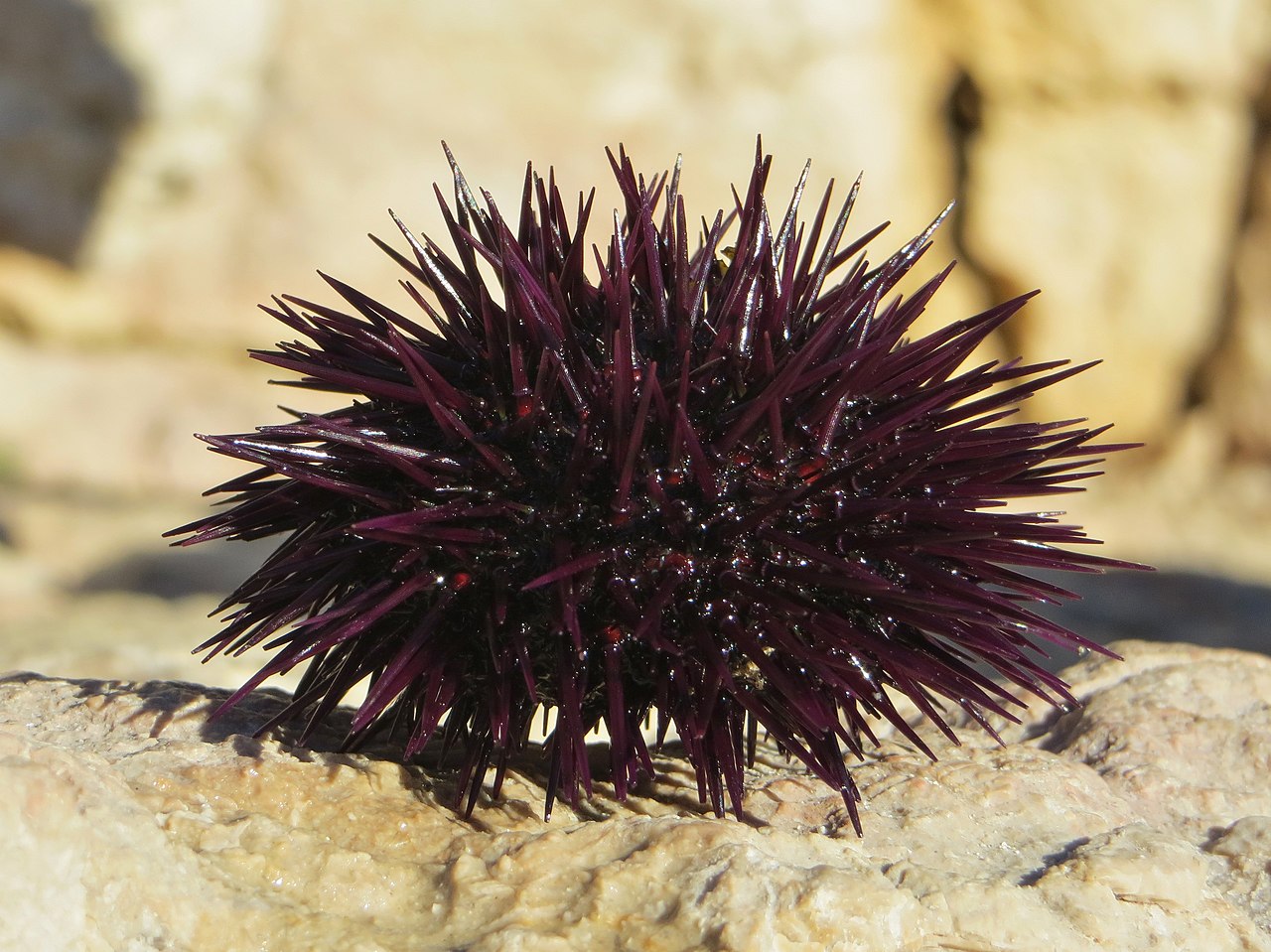
Paracentrotus lividus, a regular sea urchin (Euechinoidea, infraclass Carinacea)
A sea urchin, the main character in one of the proposals. Pic by Frédéric Ducarme

22 October 2024

Back to the microscope

The thing with term is that once it starts, it moves fast. Events always approach quicker than you want them too. And one of the events that was approaching me was the micropalaeontological practical associated with our fieldwork module. The students then analyse their (modern) samples for foraminifera assemblages, so they can compare them with the fossil samples. But someone has to do these fossil samples. And that someone is me. 

I also felt the need to split the samples, in order to not spend ludicrous amounts of time on them. Some samples were so big there really was no choice. And the School has such a cute sample splitter. I think it hasn’t made the blog yet, but it’s time to change that! 

The cute sample splitter

Some forams


I quite like doing some forams! It’s just that there is so much else to do. But it’s done now. Roll on the practical! With a new charming assistant. Stay tuned! 


17 October 2024

Llanddwyn in the sun

With a new academic year we get another series of field trips with the freshers. And when we can, we start with Llanddwyn. And this year we could.

There was some confusion beforehand. I had asked Dei what the logistical plan was. Two vehicles delivered to main campus he said; the big one for him and the smaller one for Jaco or me. 

Then I got an email from the SOS receptionist. A car had been delivered for me, in Menai Bridge. I was puzzled. The head of our technical staff, who books vehicles, wasn’t in, so couldn’t clarify. Was it for the upcoming glaciology trip? I went to pick up the key. The car was clearly for the Monday, when we had the Llanddwyn trip, but Dei assured me it wasn’t anything to do with that. Weird! 

When I had already left I got a message from the head of technical stuff. It was for our trip! That was weird. And he specified it was for me, not for Jaco. That annoyed me if it; that means I would have to first go to Anglesey, pick up that car, drive back to Bangor, pick up the students, and then go back to Anglesey for the field trip. Wouldn't it have been a lot more practical to allocate it to Jaco? He lives on Anglesey!

On the very day it turned out okay, though; because of my ankle problems so I had hardly been running I was having exercise withdrawal symptoms. I quite often drive to work if I have a field trip on, basically because I carry so much more if I am out in the field all day than when I am just sitting in a comfortable office, and it is difficult to fit all that into my bicycle bags, and it can also be quite exhausting to be in the field all day. But with my exercise deficiency I biked in. So having to go to Menai Bridge was actually a good thing. And Jaco had reason to shoot off as early as possible, so it was good he wasn’t involved in ferrying students around. So that turned out ok.

The forecast was great. We drove there in blazing sunshine, and that pretty much stayed with us until the end. And I had put dibs on the first outcrop. I think it’s important to rapidly bring the message across that women have scientific things to say too. Of the men it’s unlikely they’d doubt that. 

Llanddwyn seen from a pillow lava

Walking to some limestone

The melange

We talked tectonics and Ocean Plate Stratigraphy and metamorphosis and ancient life. And as usual, we ended with the amazing melange at the far end of the peninsula. 

I think it was a success! Let’s hope the other trips go as well…